
Workflow Automation
Explore recurring tasks such as assigning work, preparing reminders and following up on incomplete requests. Agree the triggers and exceptions before rollout.
Explore automation for everyday tasks, business processes and the systems your team uses. Start with a clear workflow, defined rules and the people responsible for each step.
Choose a starting point, then scope the rules, tools and handovers around your process.
Explore recurring tasks such as assigning work, preparing reminders and following up on incomplete requests. Agree the triggers and exceptions before rollout.
Bring a multi-step process into a defined flow, with the right information, named owners and review checkpoints at each stage.
Scope how information could move between supported business tools, with clear field mappings, access rules and error handling.
Product scope, integrations and availability are confirmed on enquiry.
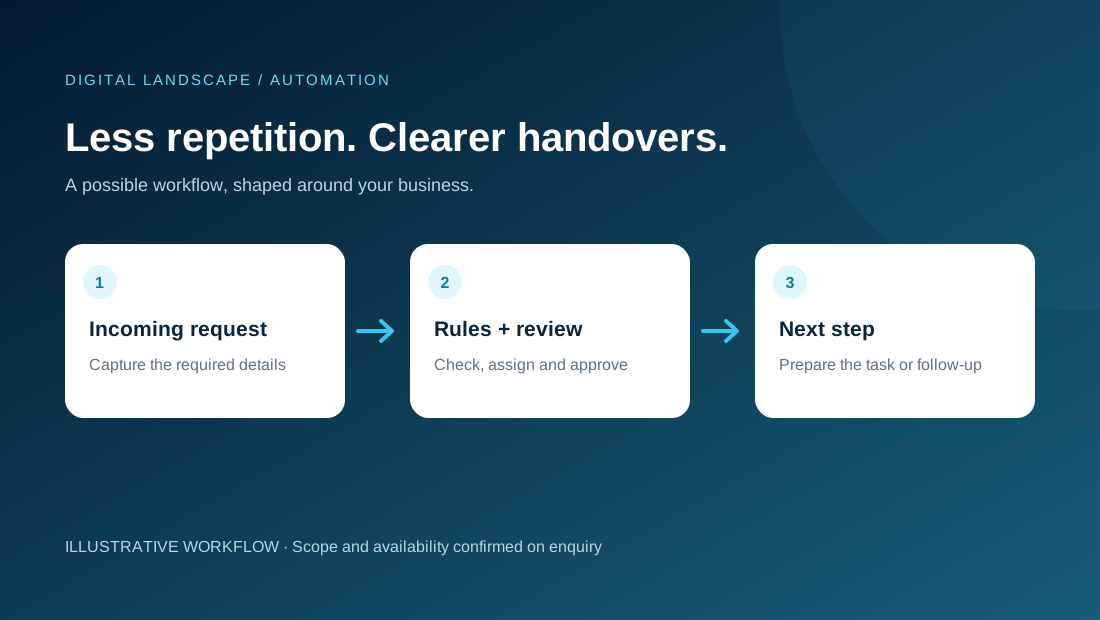
An illustrative supplier onboarding workflow connects information capture, review and follow-up tasks.
Who it is forOperations, administration & supplier management teams
This example shows a possible use of the product. It describes expected value, not a completed client project or measured results.
An operations team receives supplier details through email, copies them into a spreadsheet and asks colleagues to check missing information. The same request moves between several people, making ownership and progress difficult to follow.
Define a structured intake form and rules for the required fields. Route the request to an assigned reviewer, flag missing details and prepare follow-up tasks after approval. Scope any connections to supplier or accounting systems separately, and keep approval decisions with the responsible team.
A consistent workflow could reduce repeated entry and missed handovers, while giving the team a clearer view of requests waiting for review. Exceptions would still have a named person responsible for resolving them.
Time from request to approval, incomplete submissions, repeated data entry and overdue handovers.